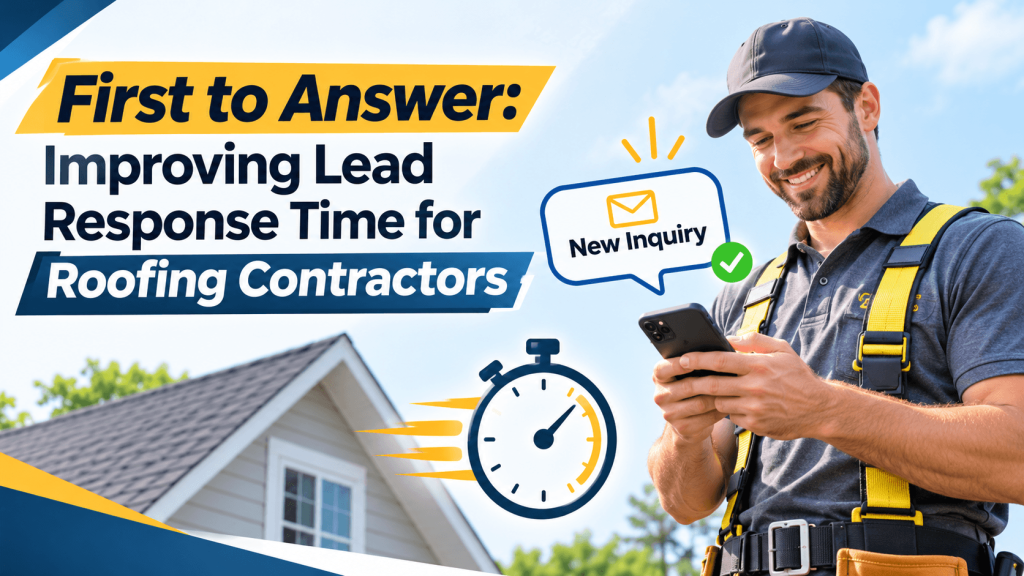
After a windstorm in Tulsa, a homeowner notices shingles scattered across her yard. During her lunch break, she fills out quote forms on three roofing websites. One company calls back within twenty minutes, one emails the next morning, and the third never responds. By the time the second company reaches out, she has already scheduled an inspection.
Getting found online is only half the job. What happens after a homeowner reaches out often decides who gets the work.
Why Response Speed Matters
Many homeowners contact more than one contractor, especially for urgent repairs. The first company to respond clearly has a natural advantage, simply because it starts the conversation while the need is fresh.
Slow responses can also undercut the trust your reviews and listings worked to build. A homeowner who waits two days for a callback may assume the company is too busy or disorganized to handle the project well.
Practical Ways to Respond Faster
A few simple systems make a big difference:
- Send an automatic text or email confirming each form submission, with a realistic callback time
- Route web forms and messages to a phone someone checks throughout the day
- Set clear callback hours and say so on your website and profiles
- Use a simple tracking sheet or CRM so no inquiry slips through the cracks
- Prepare short scripts for common questions, such as inspection scheduling and insurance claims
During storm surges, it’s better to set honest expectations, such as a callback within one business day, than to promise speed you can’t deliver.
Make Every Contact Path Reliable
Customers reach roofers through many channels: phone calls, web forms, Google Business Profile, and directory listings. Each path needs to work and lead to someone who will respond.
Test them regularly. Submit your own form, call your listed numbers, and confirm that links on your profiles and listings are current. A general directory such as List2Rank is one of those paths, and its Roofing category also shows how other contractors present emergency service and inspection options. Make sure your listing shows a phone number that actually gets answered.
A common mistake is listing an email address no one checks, which quietly loses leads for months.
Win the Job After the Click
Visibility brings homeowners to your door, but quick, reliable follow-up wins the inspection. Confirm inquiries automatically, test every contact path, and keep your profiles and listings, including on List2Rank, pointing to channels your team actually monitors.
Frequently Asked Questions
How quickly should a roofing company respond to a new inquiry?
As quickly as you realistically can during business hours, ideally the same day. For urgent problems like active leaks, faster is better. If you can’t call back right away, send an automatic confirmation that tells the homeowner when to expect a call, and then keep that promise.
Should we use an answering service?
An answering service can help roofing companies capture calls after hours or during storm surges, when office staff can’t keep up. Make sure the service knows your service area, core offerings, and how to handle emergencies, and review call notes daily so every message gets a timely callback.
Is texting customers a good idea?
Many homeowners appreciate text updates for scheduling and quick confirmations, but get their permission first and follow the rules that apply to business messaging. Keep texts short and professional, include your company name, and offer a phone call for detailed questions about pricing or insurance claims.
How can we track which leads we’ve contacted?
A simple spreadsheet works for small teams, with columns for the date, source, contact details, first response time, and status. As volume grows, a customer relationship management tool can automate reminders. What matters most is that every inquiry has an owner and a clear next step.

admin
We share practical, no-fluff advice to help local businesses get listed, get ranked and get results.